.png)
OHIO CLASS SUBMARINE
Detailed technical analysis, nuclear triad deterrence capabilities, stealth profile, and weapons architecture of the Ohio Class submarine platform.
1. Introduction & History
The Ohio-class submarine represents the pinnacle of cold war
naval architecture and remains the silent backbone of the United
States strategic deterrence posture. Designed in the 1970s and
entering service in 1981, a total of 18 Ohio-class vessels were
built by the Electric Boat Division of General Dynamics.
These submarines were specifically engineered to provide an
undetectable, sea-based nuclear second-strike
capability—ensuring that even if land-based silos and bomber
airfields were destroyed in an initial nuclear strike, the Ohio
fleet submerged deep within the world's oceans could deliver a
decisive retaliatory response. For over four decades, they have
formed the most survivable leg of the United States Nuclear
Triad.
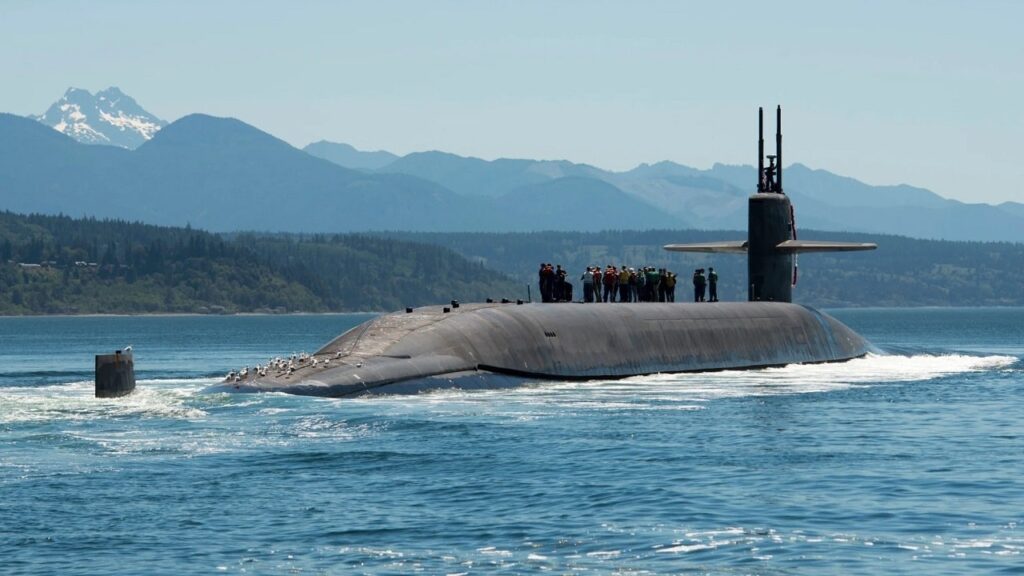
2. Structural Design, Engineering & Nuclear Propulsion
Standing at 170 meters (560 feet) in length and displacing
18,750 tons when submerged, the Ohio class ranks among the
largest submarines ever constructed, surpassed in size only by
Russia's Typhoon and Borei classes.
i) Power Plant: The
vessel is powered by a single General Electric S8G pressurized
water nuclear reactor (PWR) driving two steam turbines, which
generate over 60,000 shaft horsepower (45 MW) to a single
propeller shaft.
ii) Operational
Range & Endurance: Because nuclear energy requires no oxygen and
consumes negligible fuel over decades, the ship's range is
effectively infinite. Its operational deployment limit
(typically 70 to 90 days submerged) is constrained solely by
food supplies for its 155-person crew and necessary mechanical
maintenance.
iii) Depth & Speed:
It can achieve submerged speeds exceeding 25 knots (46 km/h) and
operate at depths below 240 meters (800 feet).
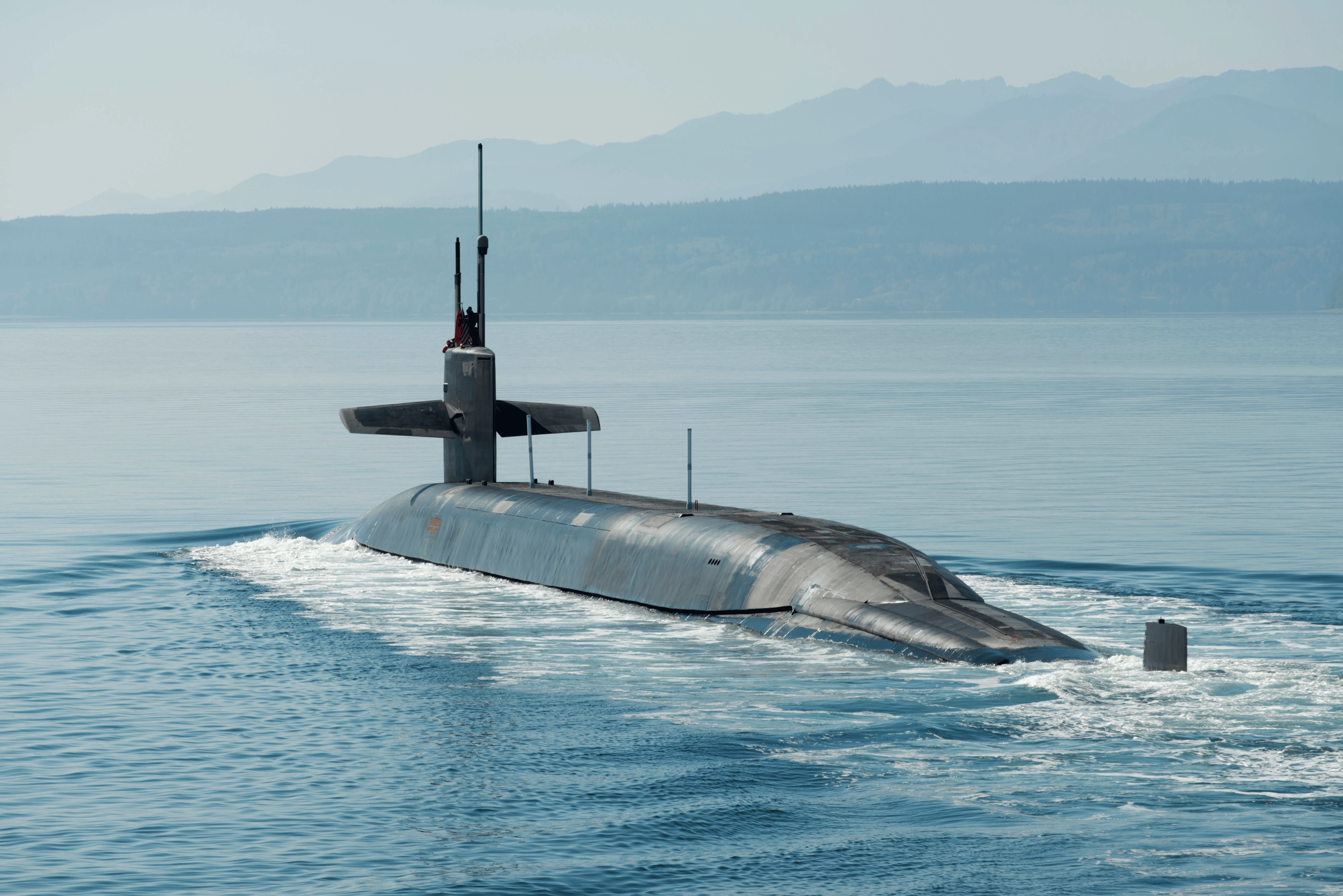
3. Stealth Integration, Modernization & Future Strategy
Despite their massive size, Ohio-class submarines are
exceptionally quiet underwater.
i) Acoustic
Stealth: They are coated with thousands of anechoic rubber tiles
designed to absorb active sonar pings from enemy ships while
dampening internal engine noise. Internal machinery is mounted
on sound-isolated, flexible platforms to prevent mechanical
vibrations from transferring into the hull and ocean water.
ii) Digital
Upgrades: Through continuous acoustic rapid COTS insertion
(ARCI) programs, their sonar suites, passive line arrays, and
digital combat management systems are routinely updated to
detect modern threats at extreme ranges.
iii) Replacement
Plan: Having far exceeded their original 30-year lifespan
through life-extension programs, the Ohio class will undergo
gradual decommissioning starting in 2031. They will be
progressively replaced by the next-generation Columbia-class
nuclear submarines, which feature electric-drive propulsion and
reactor cores designed to last the full 42-year service life
without refueling.
4. Armament, Tactical Efficacy & Destructive Power
The Ohio-class derives its terrifying force from three main
weapon systems:
i) Trident II D5
SLBM: Carried by 14 SSBNs (up to 24 missiles each). Each missile
deploys multiple thermonuclear warheads (such as the W88 at 475
kilotons—over 30 times more powerful than the Hiroshima bomb). A
single submarine carries enough nuclear yield to obliterate
dozens of major cities and wipe out an entire continent in
minutes.
ii) Tomahawk Cruise
Missile: Carried by 4 SSGNs (154 missiles each). Armed with
1,000 lb high-explosive warheads, they skim low above terrain to
bypass enemy radar, achieving a 90%+ combat hit accuracy to
annihilate military infrastructure.
iii) Mark 48 ADCAP
Torpedo: Equipped with a 650 lb warhead, it detonates directly
underneath target vessels, snapping warship keels using extreme
hydrostatic shockwaves.
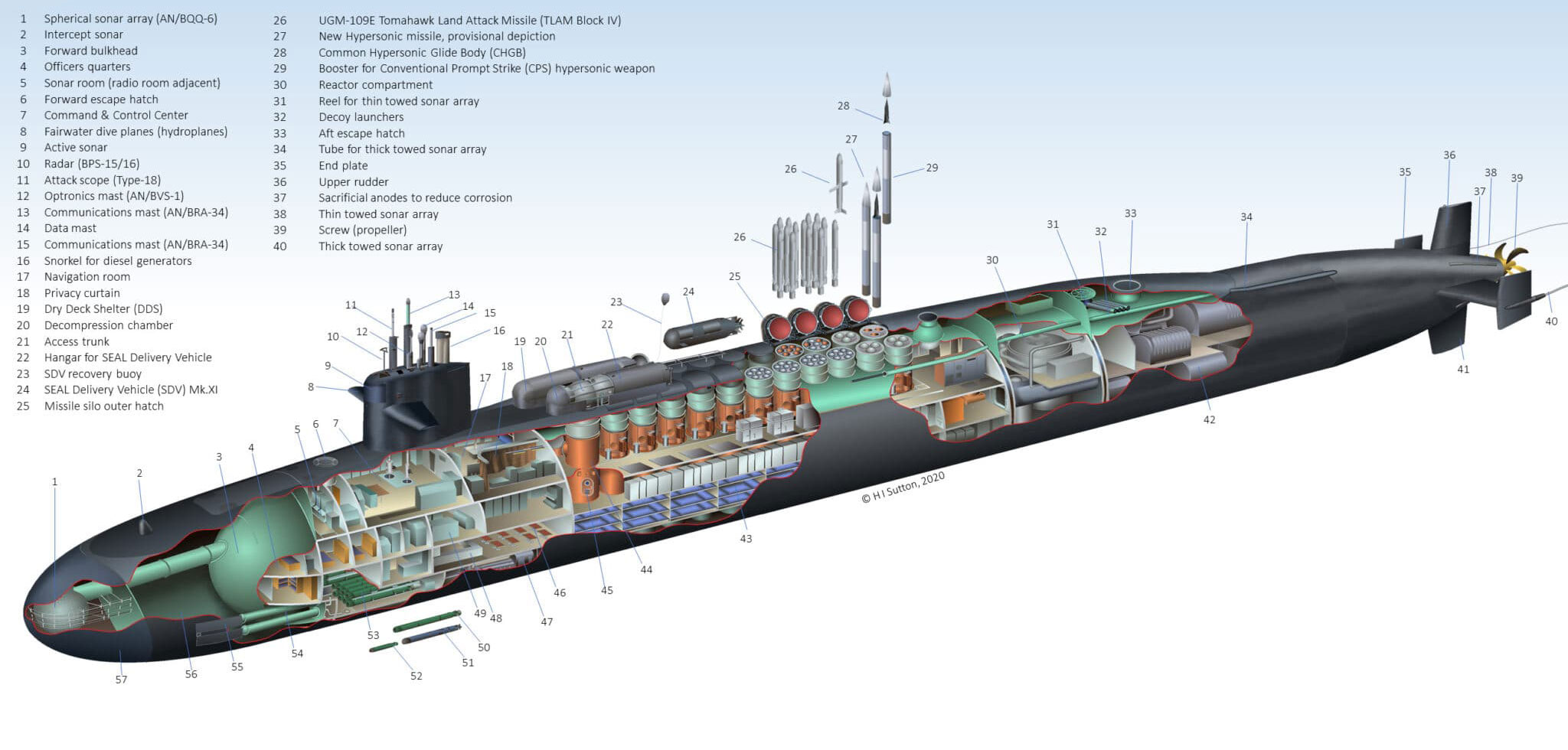
3D Tactical Telemetry View
* Controls: Left-click + drag to rotate | Scroll to zoom | Right-click + drag to pan.